







For best experience, use Nutshell app on your smartphone.
For best experience, use Nutshell app on your smartphone.


For best experience, use Nutshell app on your smartphone.

For best experience, use Nutshell app on your smartphone.


6:13 pm on 16 September 2026, Wednesday
For Filipinos undergoing dialysis, treatment can shape much of everyday life, from repeated trips to dialysis centers and mounting expenses to hours devoted to care. Two young Filipino innovators are hoping to make part of that experience easier to manage at home.
University of the Philippines Diliman graduates Andrew Jacob Buensalido and Allyson Cabrestante have been named the Philippine national winners of the James Dyson Award 2026 for BiDaKidney, a low-cost, semi-automated peritoneal dialysis machine.
The invention is designed for chronic kidney disease patients who can undergo peritoneal dialysis (PD) at home. Unlike hemodialysis, which commonly requires treatment at a dialysis center, PD uses the lining of the abdomen as a natural filter. While it offers greater flexibility, patients and caregivers still need to manage fluid exchanges, monitor treatment, handle tubing, and keep records.
BiDaKidney aims to simplify these tasks by automating key parts of the process. Compatible with standard PD supplies, the machine uses a controlled pump and built-in weight sensors to manage dialysis fluid flow and monitor its volume. The system could reduce repetitive manual work, record-keeping demands, and risks associated with frequently handling tubing.
The innovation addresses a growing healthcare concern in the Philippines. The number of people undergoing dialysis in the country reached 64,845 in 2024, up 22 percent from 53,296 in 2023, according to figures reported by the Philippine News Agency. Kidney disease also remains among the country's leading causes of death.
“When we started BiDaKidney, we were thinking about how we could help patients spend less of their lives managing dialysis and more of their time living it,” Buensalido said.
BiDaKidney received ?398,280 as the national prize, which the team plans to use for further development and commercialization. After receiving positive feedback from peritoneal dialysis nurses and nephrologists at a tertiary government hospital, the pair plans to improve the machine's usability and safety features, explore battery-powered operation during power interruptions, and prepare it for formal clinical testing and wider patient evaluation.
“We hope that BiDaKidney can eventually give families another way to manage dialysis care with more confidence at home,” Cabrestante said.
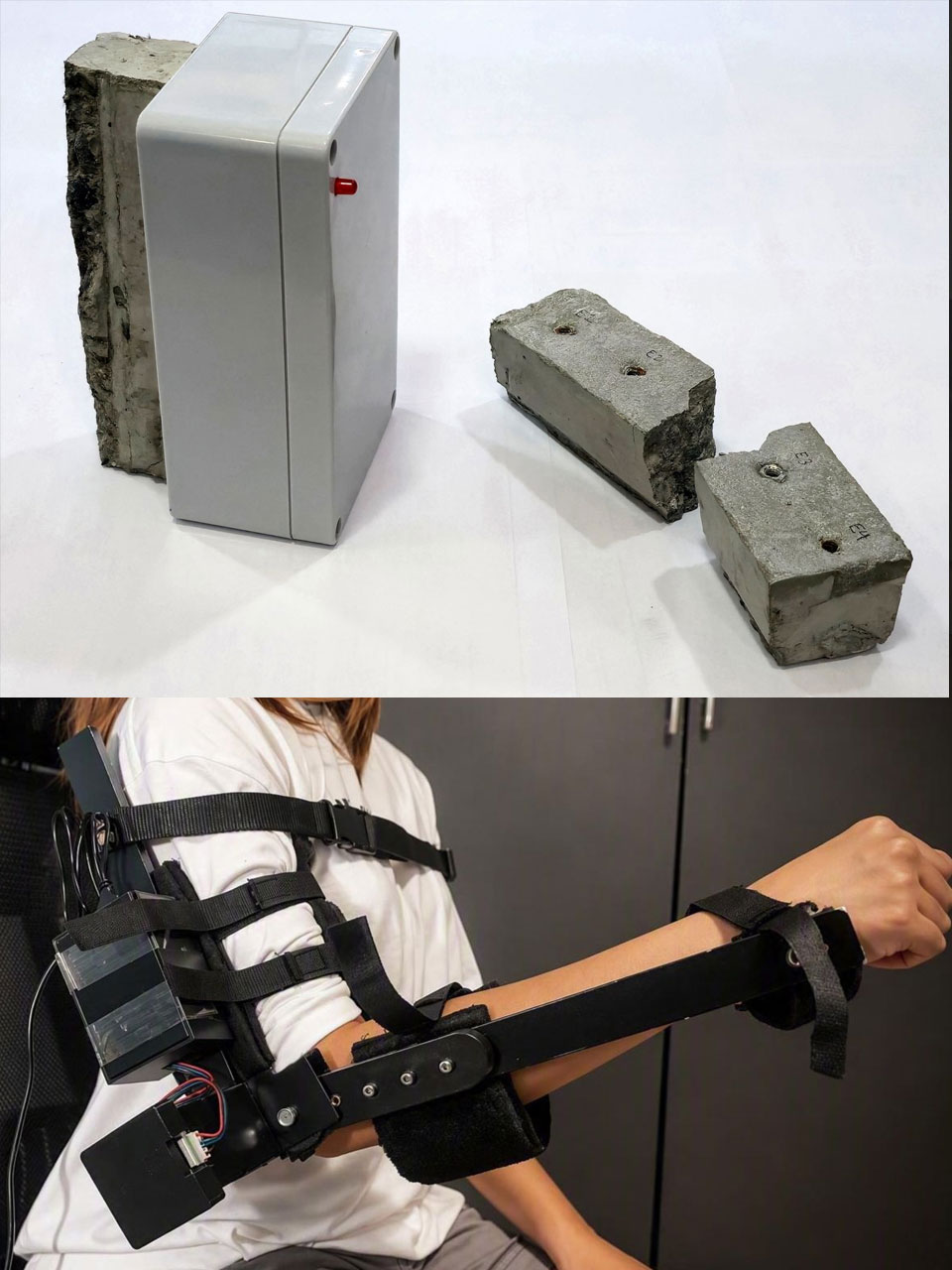
Joining BiDaKidney on the international stage are Philippine runners-up Sentinel and OrthoFlex. Sentinel transforms concrete spacer blocks into smart sensors using conductive materials such as graphene and carbon fiber, allowing structural damage to be detected and monitored remotely.
OrthoFlex, meanwhile, is a portable robot-assisted elbow rehabilitation device for stroke survivors. Designed for clinics or homes, it provides repeatable elbow movement with adjustable arm supports and a wireless mobile interface, complementing rehabilitation supervised by physical therapists.
All three Philippine inventions will advance to the international stage of the James Dyson Award for a chance to win ?2,390,230. Dyson engineers will select the international Top 20, set to be announced on October 14, before James Dyson chooses the global winners to be revealed on November 4.
Now in its 21st year, the James Dyson Award operates across 28 countries and regions. Run by the James Dyson Foundation, the international design competition has supported more than 400 problem-solving inventions with over £1.5 million in prize money.



Stay updated wherever, whenever. Nutshell is the go-to app for summarized yet informative news right in your hands. Download for FREE.


© 2018 by Nutshell
Powered by